
Israel has advanced a long-controversial settlement project in the occupied West Bank by adding a new construction tender for 2,167 housing units. The move, reported by Israeli rights groups, forms part of the E1 expansion plan and brings the total number of units under active tenders to 3,401. Critics argue that the project would fundamentally alter the geography of the territory and severely undermine prospects for a contiguous Palestinian state.
Details of the Latest Tender
According to the Israeli rights organisation Ir Amim, the additional tender for 2,167 units complements an earlier one issued at the end of August for 1,234 units. Together, the two tenders cover the full scale of housing planned under the E1 scheme. The new tender is scheduled to open for bidding on 25 October 2026, just two days before Israel is due to hold parliamentary elections.
Ir Amim described the timing as evidence of the government’s determination to push the project forward and establish irreversible facts on the ground ahead of the vote. The organisation has long monitored planning and construction in the area and views the accelerated tender process as a significant step toward implementation.
Strategic Location and Geographic Impact
The E1 area lies east of Jerusalem, between the city and the large Israeli settlement of Ma’ale Adumim. Development of the zone has been discussed for decades but repeatedly delayed amid international opposition. Rights groups and Palestinian officials maintain that building extensively in E1 would create a continuous belt of Israeli construction linking Jerusalem with settlements deeper in the West Bank.
The practical effect, they say, would be to bisect the West Bank, separating its northern and southern parts, and to isolate East Jerusalem from the rest of the territory. Palestinians regard East Jerusalem as the future capital of a state and view territorial contiguity between the northern and southern West Bank as essential for economic and political viability. Fragmentation of this land, critics argue, would leave any eventual Palestinian entity divided into disconnected enclaves.
Political Statements and Reactions
Israeli Finance Minister Bezalel Smotrich, a prominent figure in the current right-wing governing coalition and a strong proponent of settlement expansion, has previously stated that the E1 plan would “bury” the idea of a Palestinian state. His comments reflect the view held by parts of the Israeli political spectrum that expanded settlement presence strengthens Israel’s long-term position in the territory.
On the Palestinian side, a representative of President Mahmoud Abbas condemned the tenders, describing them as a violation of international law. Palestinian officials have consistently maintained that settlement construction in the occupied West Bank, including E1, is illegal and constitutes an obstacle to a negotiated two-state solution.
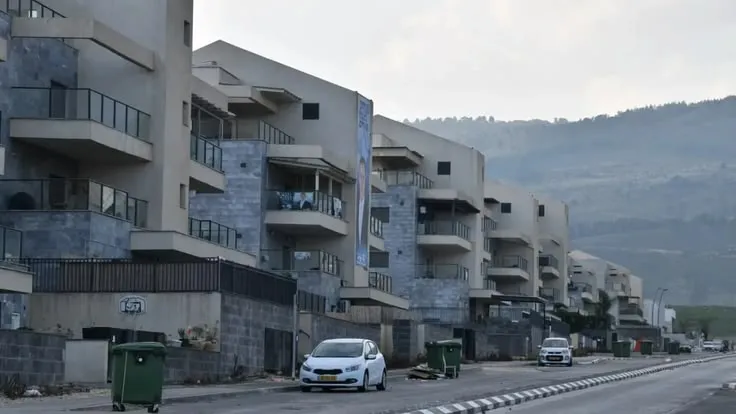
International reactions have also been critical. Several Western governments and organisations have previously warned that advancing E1 would damage the viability of a future Palestinian state. Some countries have taken steps such as restricting trade with settlements, reflecting broader concern over the trajectory of construction in the West Bank.
Legal and Diplomatic Context
The status of Israeli settlements in the West Bank remains one of the most contested issues in the Israeli-Palestinian conflict. United Nations bodies, the majority of the international community, and Palestinian representatives regard the settlements as illegal under international humanitarian law, particularly the Fourth Geneva Convention’s prohibition on an occupying power transferring its civilian population into occupied territory. Israel disputes this interpretation, arguing that the territory is disputed rather than occupied and that settlements are lawful.
E1 has held particular symbolic and strategic weight because of its location. Successive Israeli governments have at times advanced planning while facing diplomatic pressure to freeze activity. The current right-wing coalition has overseen a notable acceleration of settlement approvals and construction across the West Bank, of which the E1 tenders form a high-profile part.
Broader Settlement Trends
The E1 development occurs against a backdrop of expanded settlement activity. Rights organisations tracking construction have reported substantial increases in housing approvals and tenders in various parts of the West Bank under the present government. Supporters of the policy frame it as a legitimate expression of Israeli rights and security needs. Opponents, including many international actors and Israeli civil society groups, contend that the cumulative effect is to reduce the territorial basis for a two-state outcome and to entrench a one-state reality with unequal rights.
The decision to schedule the new tender’s opening immediately before elections has drawn particular attention from monitoring groups. They interpret the timing as an effort to lock in progress that would be politically difficult to reverse, regardless of the election result.
Implications for the Peace Process
For decades, the international consensus supporting a two-state solution has rested on the assumption of a contiguous and viable Palestinian territory in the West Bank and Gaza, with East Jerusalem as its capital. Projects that significantly alter the demographic and geographic reality of key corridors such as E1 are widely seen as testing that assumption.
Whether the tenders proceed to actual construction will depend on multiple factors, including legal challenges, political developments after the Israeli elections, and the degree of international response. Rights groups have indicated they are examining legal avenues to contest the process. At the same time, the publication of the tenders themselves marks a concrete administrative step beyond earlier planning stages.
Looking Ahead
The addition of the 2,167-unit tender brings the E1 project closer to the construction phase than it has been in many years. For Israeli authorities advancing the plan, it represents the fulfilment of long-standing territorial and demographic objectives. For Palestinian leaders and international critics, it constitutes a serious setback to the possibility of a negotiated resolution based on two states.
As bidding approaches in late October, the issue is likely to remain a focal point of diplomatic discussion and domestic political debate in Israel. The outcome will influence not only the physical landscape east of Jerusalem but also the broader parameters within which any future Israeli-Palestinian negotiations would take place. The coming weeks will determine how far the current tenders translate into irreversible change on the ground.
Read more – sevendollarmiracle.com
