
Sri Lanka’s anti-corruption drive has intensified with the summoning of former First Lady Shiranthi Rajapaksa for questioning over alleged misuse of donations by her charity. The move forms part of a broader revival of long-dormant investigations into members of the once-dominant Rajapaksa family under President Anura Kumara Dissanayake’s government.
The Summons and the Allegations
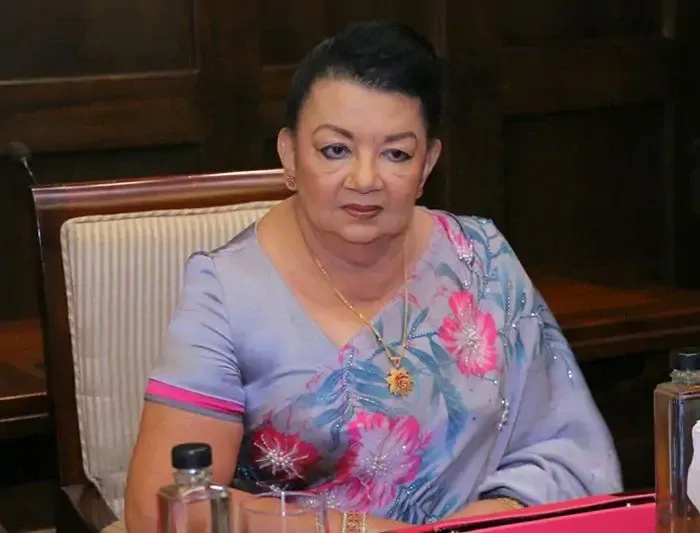
On 16 September 2026, the Financial Crimes Investigation Division (FCID) served a notice on Shiranthi Rajapaksa, 73, shortly before she boarded a flight to Singapore. Police sought to question her in connection with approximately 10 million rupees (around $30,750) collected by her Siriliya Saviya charity. The funds were raised for a PET scanner intended for a local cancer hospital.
Investigators have told a court that the scanner had already been donated by the Chinese government. Despite this, the charity is alleged to have continued soliciting donations and to have misused the collected money. Family spokesman Manoj Gamage rejected any suggestion of wrongdoing and stated that the funds had not been misappropriated. He emphasised that Shiranthi Rajapaksa was travelling for medical treatment, specifically eye-related procedures, and would return to Sri Lanka after completing her treatment. He denied that she was attempting to leave the country to evade investigators.
The timing of the notice—delivered minutes before boarding—drew public attention and prompted the family to clarify the circumstances. According to their account, she had been admitted to a private hospital in Colombo the previous day and proceeded directly to the airport. They maintained that no prior formal summons requiring an appearance had been issued before the airport notification.
A Broader Pattern of Revived Investigations
The summons is not an isolated action. President Anura Kumara Dissanayake’s administration, which came to power promising systemic change and accountability, has reactivated several corruption probes that had remained largely dormant for years. These investigations target various members of the Rajapaksa family, which held significant political power in Sri Lanka for nearly two decades.
Shiranthi Rajapaksa’s eldest son, opposition lawmaker Namal Rajapaksa, is separately under investigation in connection with allegations linked to a 2013 Airbus aircraft procurement deal for SriLankan Airlines, signed during his father’s presidency. Reports indicate he has faced remand proceedings related to money-laundering aspects of the case involving alleged bribes. Other family members have also been drawn into related inquiries.
The Rajapaksa family has consistently rejected the allegations, describing the cases as politically motivated attempts to target them. Former President Mahinda Rajapaksa has previously characterised such moves as efforts by the government to deflect attention from other issues.
Political and Historical Context
The Rajapaksas rose to prominence under Mahinda Rajapaksa, who served as president during a critical period that included the end of the country’s long civil war. The family later expanded its influence across multiple government positions. Their tenure was marked by both strong domestic support in certain constituencies and persistent accusations of nepotism, authoritarian tendencies and financial irregularities. Many of those accusations surfaced more prominently after the family’s loss of power, particularly following the economic crisis that led to widespread protests in 2022.
Subsequent governments initiated various probes, but progress was often slow or incomplete. The current administration under Dissanayake, whose National People’s Power coalition campaigned heavily on anti-corruption and institutional reform, has signalled a more determined approach. Reactivating cases involving high-profile figures is widely seen as an attempt to demonstrate that accountability applies even to the most powerful political families of the recent past.
At the same time, the government faces the challenge of ensuring that investigations are conducted transparently, based on evidence, and free from perceptions of selective justice. In a polarised political environment, such cases inevitably attract claims of score-settling from one side and demands for thorough accountability from the other.
The Charity at the Centre of the Probe
Siriliya Saviya, associated with Shiranthi Rajapaksa, operated as a charitable organisation during the years of Rajapaksa influence. Like many foundations linked to political figures, it engaged in social and welfare activities, including fundraising for medical equipment. The specific allegation concerning the PET scanner focuses on whether donors were properly informed about the status of the equipment and whether the collected funds were applied as intended.
Charity-related financial inquiries often hinge on documentation, banking records, donor communications and the timeline of asset acquisition. Investigators appear to be examining whether continued fundraising after the scanner had already been secured constituted a misuse of public trust and donated resources. The family maintains that proper accounts exist and that no misappropriation occurred.
Implications for Governance and Public Trust
The revival of these cases carries significance beyond the individuals involved. Sri Lanka’s recent economic crisis severely damaged public confidence in political institutions and elite accountability. Demonstrating that longstanding allegations are being examined systematically can help rebuild trust, provided the process is perceived as fair and evidence-based.
For the opposition, the investigations provide an opportunity to argue that the government is prioritising political targeting over broader economic recovery and governance challenges. For supporters of the current administration, they represent a necessary reckoning with the past. The judiciary and investigative agencies will ultimately determine the strength of the evidence and the outcomes of the cases.
Shiranthi Rajapaksa’s planned return after medical treatment, as stated by her representatives, will likely lead to her appearance before the FCID. Parallel proceedings involving Namal Rajapaksa and potentially other family members will continue to unfold in the courts.
Looking Ahead
The coming weeks and months will test both the capacity of Sri Lanka’s investigative institutions and the political maturity of its leadership. Successful, transparent handling of high-profile cases can strengthen the rule of law. Conversely, any perception of procedural irregularity or selective enforcement risks deepening polarisation.
The summons issued to the former first lady marks another chapter in the long-running scrutiny of the Rajapaksa family’s years in power. Whether it leads to substantive findings of wrongdoing or is ultimately dismissed will depend on the evidence presented and the independence with which the process is conducted. For a country still recovering from economic and political upheaval, the manner in which these investigations proceed may prove as important as their final results.
The government’s stated commitment to accountability will be measured not only by the cases it pursues but by the consistency, fairness and institutional integrity with which it pursues them.
Read more – pokerslive.com
