
Denmark has taken a significant step in European climate infrastructure with the start of commercial operations at the Greensand carbon capture and storage project. On 18 September 2026, the facility began permanently storing carbon dioxide beneath the North Sea seabed, becoming the European Union’s first full-scale CO2 storage site and complete value chain. The project, led by INEOS Energy with partners Harbour Energy and the Danish North Sea Fund, marks the transition of carbon storage from pilot and planning stages into operational reality within the EU.
Official Start of Commercial Operations
Energy group INEOS announced that Greensand had commenced storing CO2 under an old oil platform in the Danish sector of the North Sea. The formal inauguration took place at the Port of Esbjerg, with King Frederik X of Denmark participating in the opening of the full-scale facility. Officials and industry leaders described the milestone as the moment Europe moved beyond targets and ambitions into functioning carbon transport and storage infrastructure.
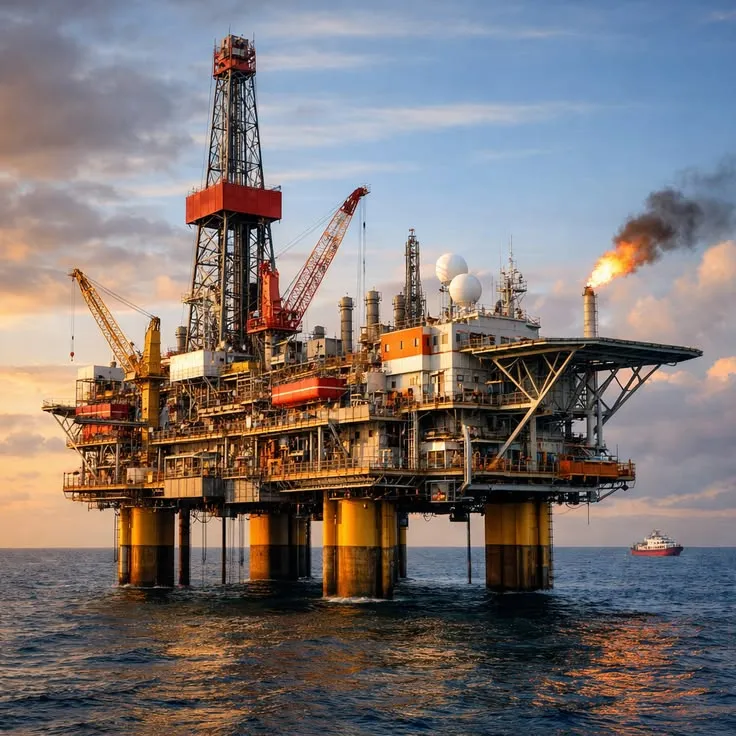
The project injects CO2 into the depleted Nini West oil reservoir, located approximately 250 kilometres offshore. Storage occurs at a depth of about 1,800 metres below the seabed. In its initial commercial phase, Greensand can handle up to 400,000 tonnes of CO2 per year. The site is designed for substantial expansion, with the potential to store between 4 million and 8 million tonnes annually as additional capture projects come online and demand grows.
How the Full Value Chain Works
Greensand establishes an end-to-end process. Carbon dioxide is sourced primarily from Danish biomethane plants. After capture, the gas is liquefied and transported by truck to a dedicated terminal at the Port of Esbjerg. From there, it is loaded onto Carbon Destroyer 1, described as the EU’s first purpose-built CO2 carrier, and shipped to the offshore injection site.
Once at the Nini West field, the CO2 is injected into the carefully selected geological formation for permanent storage. The integrity of the reservoir has been assessed by the Geological Survey of Denmark and Greenland, and the project has received safety approval from DNV. This complete chain—from industrial source through liquefaction, land and sea transport, to deep geological storage—distinguishes Greensand as a fully operational system rather than a standalone injection well.
Strategic Importance for the European Union
Although Norway’s Northern Lights project began storing CO2 earlier, Norway lies outside the EU. Greensand therefore holds the distinction of being the first full-scale storage site operating within the Union. European Commissioner for Energy and Housing Dan Jørgensen highlighted the project’s dual role: enabling industries to pursue lower-carbon pathways while supporting continued production, investment and employment on the continent.
The European Union has set a legally binding target under the Net-Zero Industry Act for at least 50 million tonnes of annual CO2 storage capacity by 2030. Greensand’s initial volumes are modest relative to that goal, yet its operational status provides a practical foundation. Future carbon capture projects across Europe now have a functioning destination for permanent storage and a proven logistics model to build upon.
From Pilot to Commercial Scale
Greensand’s path to commercial operation involved several earlier milestones. An exploration permit in late 2022 allowed limited injection testing. In March 2023 the project achieved the first CO2 injection in the North Sea. A final investment decision for the commercial phase followed in December 2024, and the Danish Energy Agency granted full-scale storage approval in December 2025. The September 2026 start of operations completes the transition from demonstration to ongoing commercial service.
INEOS Energy serves as day-to-day operator. Company leadership has emphasised that the technology works and that storage capacity is ready. The remaining challenge, they argue, lies in creating the policy and market conditions that will allow carbon capture to scale across European industry.
Role in Industrial Decarbonisation
Many industrial processes, including those in cement, chemicals, refining and biomethane production, generate CO2 that is difficult to eliminate entirely through electrification or fuel switching alone. Carbon capture and storage offers a route to manage these residual emissions. By providing a permanent offshore storage option, Greensand supports the argument that industrial activity and climate progress need not be mutually exclusive.
The project’s initial reliance on biomethane-plant CO2 allows the full chain to operate with currently available volumes while larger industrial capture facilities develop. Over time, INEOS intends to accept CO2 from a wider range of European sources as those capture projects mature.
Technical and Safety Foundations
Storing CO2 in depleted oil and gas reservoirs is a recognised approach that utilises well-characterised geological structures. The Nini West field’s history as a hydrocarbon producer provides extensive data on the rock formations, seals and pressure behaviour. Independent geological assessment and third-party safety certification form part of the project’s risk-management framework.
Offshore storage also reduces competition with onshore land uses and places the permanent repository away from population centres. Continuous monitoring of injection rates, reservoir pressure and potential leakage pathways remains essential to long-term integrity.
Broader Context and Next Steps
Greensand arrives at a moment when European climate policy increasingly recognises the need for both emissions reduction and carbon management technologies. While renewable energy deployment, energy efficiency and electrification remain central, hard-to-abate sectors require complementary solutions. Operational storage capacity is a prerequisite for those solutions to move from concept to practice.
Expansion plans aim to multiply the project’s annual capacity many times over. Realising that scale will depend on the pace of carbon capture investment across industry, the development of additional transport infrastructure, and supportive regulatory and financial frameworks. Greensand’s early operation supplies a working reference point for those subsequent developments.
A Practical Milestone
The inauguration of full-scale CO2 storage under the Danish North Sea represents more than a single project’s achievement. It demonstrates that a complete carbon capture, transport and permanent storage value chain can function within the European Union. With initial capacity of up to 400,000 tonnes per year and a clear pathway to several million tonnes, Greensand provides tangible infrastructure on which future climate efforts can build. For European industry seeking to reduce emissions while remaining competitive, the existence of an operating storage destination marks a concrete step forward.
Read more – blessandseemusic.com
