
Rajasthan’s rapid build-out of renewable energy capacity is placing sustained pressure on the transmission network that carries power to load centres across northern India. High daytime solar generation, combined with elevated overall electricity demand, has pushed key transformers and transmission lines beyond comfortable operating limits, according to assessments by the region’s grid operator.
The Northern Regional Load Despatch Centre has flagged the issue as generation from Rajasthan’s renewable complexes continues to rise faster than the evacuation infrastructure needed to move that power reliably to consuming states. The result is a recurring mismatch that appears most acutely during peak solar hours.
Rising Renewable Output Meets Limited Evacuation Capacity
Rajasthan has emerged as one of India’s largest hubs for utility-scale solar and renewable capacity. Commissioned renewable capacity in the state has grown significantly in recent years, reaching levels where available transmission margins have been fully allocated. Data referenced by the Northern Regional Load Despatch Centre indicates roughly 23 GW of commissioned renewable capacity against transmission capacity of about 18.9 GW in relevant corridors.
This imbalance has left more than 4 GW of capacity—particularly projects operating under temporary general network access—facing severe daytime curtailment. In practical terms, several solar plants are unable to inject power into the grid during the hours when they generate most strongly. Industry reports have put the affected solar capacity at approximately 4,300 MW, involving multiple developers and projects valued in the tens of thousands of crores.
Even after the commissioning of important new infrastructure such as the 765 kV Khetri-Narela line, usable additional transmission margin has remained limited. In some assessments the line contributed only around 600 MW of effective capacity once long-term access allocations were taken into account, leaving the overall constraint largely unresolved.
Daytime Stress on Lines and Transformers
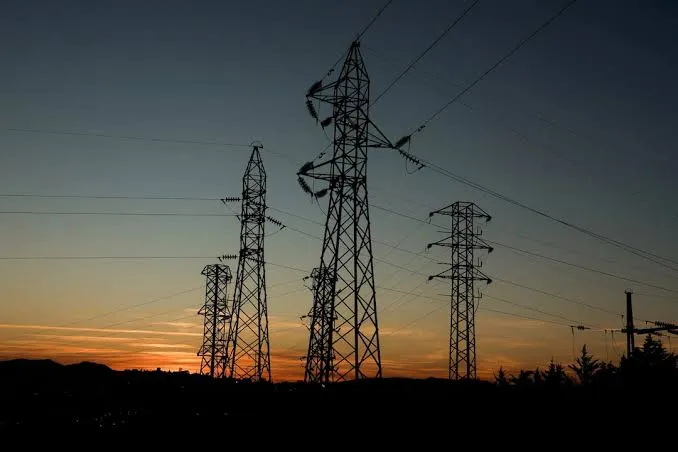
The strain is most visible during daytime solar generation hours. High volumes of power flowing from Rajasthan’s renewable complexes towards northern load centres push loading on critical transmission lines and transformers above preferred thresholds. Grid operators monitor these corridors closely because sustained overloading increases the risk of equipment stress, voltage instability and the need for emergency interventions.
Technical challenges compound the capacity shortfall. Reports from regional power committee discussions have noted voltage oscillations at renewable energy complexes, low short-circuit ratios at certain pooling stations, and high loading on corridors such as the Bhadla-Bikaner 400 kV and Bikaner-Khetri 765 kV lines. These conditions reduce the system’s ability to absorb additional renewable injection without compromising stability.
At the same time, India’s overall power demand has remained elevated. Peak demand has reached levels around 270 GW in the recent period, reflecting both economic activity and seasonal factors. When high demand coincides with strong solar output from the west, the transmission system linking generation-rich Rajasthan to northern consumption centres experiences simultaneous pressure from both ends.
Curtailment and Its Consequences
Curtailment has become a regular operational reality for a significant portion of Rajasthan’s renewable fleet. Plants under temporary access arrangements have faced near-total shutdown during peak solar windows, with limited injection permitted only in off-peak periods and often in a staggered manner. Developers have warned that prolonged restrictions affect project revenues, debt servicing and long-term investment confidence.
The situation illustrates a broader structural issue facing India’s renewable expansion. Generation capacity has been added at a rapid pace in resource-rich states, while the inter-state transmission system required to evacuate that power has lagged. Right-of-way challenges, land and clearance processes, equipment supply constraints and the sheer scale of required investment have all contributed to the gap.
System-Level Implications for the Northern Grid
For the Northern Region as a whole, the concentration of renewable capacity in Rajasthan creates both opportunity and operational complexity. On one hand, the state supplies large volumes of clean daytime power that can help meet demand in neighbouring states. On the other, the limited transfer capability means that surplus generation cannot always be fully utilised, while the physical assets carrying the power operate closer to their limits.
Grid operators must balance multiple objectives: maximising renewable absorption, maintaining voltage and frequency stability, protecting equipment from overload, and ensuring reliable supply to consumers. When renewable output is high and transfer margins are tight, the tools available include curtailment of generation, careful scheduling of conventional plants, and real-time management of power flows. Each of these measures carries economic or operational costs.
Addressing the Transmission Bottleneck
Resolving the current constraints will require coordinated action on several fronts. Accelerated commissioning of planned inter-state transmission projects is essential to expand evacuation capacity from Rajasthan. Improvements in operational practices, including better forecasting of renewable output and more flexible conventional generation, can help manage intra-day variability.
Energy storage is increasingly viewed as a complementary solution. By absorbing excess daytime solar generation and releasing it during evening peak periods, battery systems can reduce the need for curtailment and ease pressure on transmission corridors. Rajasthan has begun exploring grid-scale storage initiatives aimed at improving system utilisation.
Longer-term planning must also align the pace of renewable capacity addition with the readiness of associated transmission infrastructure. Experience in Rajasthan shows that granting connectivity without corresponding evacuation pathways quickly leads to stranded or under-utilised assets.
A Critical Phase for India’s Energy Transition
The pressures currently visible on northern India’s power lines and transformers reflect the challenges of a rapid energy transition. India continues to add renewable capacity at scale while electricity demand keeps rising. The physical network that connects generation to load must expand in step if the benefits of clean power are to be fully realised.
Rajasthan’s experience serves as an early indicator of the stresses that can emerge when generation growth outpaces transmission. Addressing these constraints is not merely a technical necessity; it is central to maintaining investor confidence, controlling costs for consumers and ensuring that the country’s renewable ambitions translate into reliable, usable electricity across the northern grid.
Read more – marathibhashaa.com
