
Everyday life at home is becoming simpler and more efficient thanks to connected technology that anticipates needs rather than simply responding to commands. Smart home systems now learn household routines, manage energy use, enhance security, and support wellness without requiring constant attention. What began as isolated gadgets has evolved into coordinated ecosystems that handle lighting, climate, cleaning, and monitoring in the background. These advances help reduce daily friction, lower utility costs, and create more comfortable living environments.
Consumers increasingly seek practical benefits such as convenience, lower bills, and greater safety. The technology delivers by combining artificial intelligence, improved device communication, and focused applications for energy, security, and health.
AI-Powered Automation That Learns and Anticipates
Artificial intelligence has transformed smart homes from reactive tools into proactive systems. Modern platforms analyze daily patterns—when people wake, leave, return, or settle in for the evening—and adjust settings automatically. Lights can brighten gradually before an alarm, thermostats can prepare rooms in advance, and systems can activate security modes when the house is empty.
Voice assistants have grown more conversational and capable of handling multi-step requests. Instead of issuing individual commands, residents can describe a desired outcome, such as preparing the home for movie night, and the system coordinates lighting, temperature, blinds, and entertainment. Generative AI further personalizes experiences by offering recommendations and managing routines with less input from users. This shift reduces the mental load of managing a household and allows technology to operate more like a helpful assistant than a collection of separate devices.
Energy Management for Lower Costs and Greater Efficiency
Energy efficiency ranks among the strongest reasons people adopt smart home technology. Smart thermostats learn occupancy patterns and outdoor conditions to optimize heating and cooling, often delivering meaningful savings on utility bills. Connected lighting systems dim or turn off unused rooms, while intelligent plugs and monitors reveal which appliances consume the most power so households can make informed adjustments.
Many systems now integrate with broader energy management platforms that track usage in real time and suggest or automate changes during peak pricing periods. Some solutions coordinate with renewable sources or battery storage to further reduce reliance on the grid. As energy costs fluctuate and sustainability becomes a higher priority, these tools help households control expenses while supporting environmental goals. Wireless connectivity dominates modern installations, making it easier to add sensors and controls without major renovations.
Enhanced Security and Peace of Mind
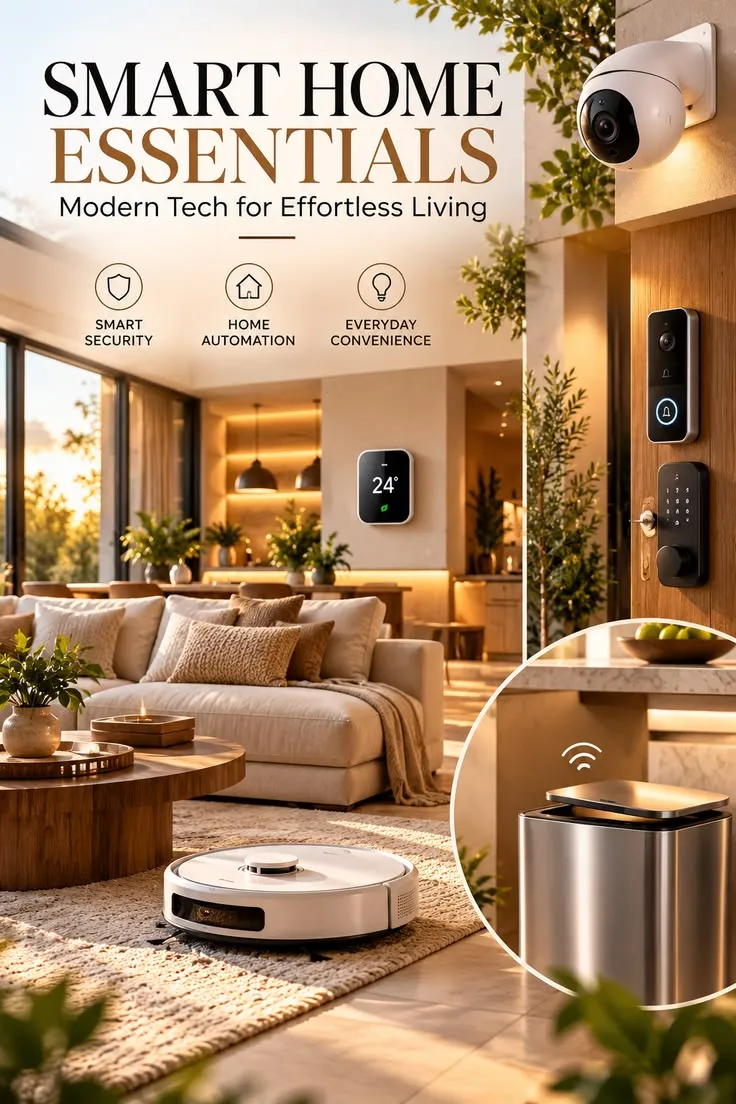
Safety remains a primary driver for smart home upgrades. Video doorbells, outdoor cameras, and indoor sensors provide clear views of activity around the property and send alerts when unusual motion or sounds are detected. Smart locks support keyless entry through biometrics, codes, or smartphone proximity, and many allow temporary guest access that can be revoked instantly.
AI improves reliability by reducing false alarms and distinguishing between people, pets, and vehicles. Systems can automatically arm when the last person leaves or notify residents if a door is left unlocked. Remote monitoring through phone apps gives continuous oversight whether someone is at work, traveling, or simply in another room. These features create a stronger sense of security without requiring constant vigilance.
Seamless Interoperability Through Open Standards
One of the most practical improvements in recent years is better compatibility between devices from different brands. The Matter standard enables products to work together across major platforms, reducing the frustration of fragmented ecosystems. Newer devices increasingly support this protocol, allowing lighting, thermostats, locks, and sensors to communicate more reliably.
Thread and other efficient wireless protocols further improve performance and battery life for battery-powered devices. As a result, homeowners can expand their systems gradually without being locked into a single manufacturer. Centralized control through apps or voice interfaces becomes more consistent, and setup processes are generally simpler than in earlier generations of smart home technology.
Health and Wellness Integration
Smart homes are expanding beyond convenience and security into everyday wellness support. Air quality monitors detect pollutants, allergens, and humidity levels, then trigger purifiers or ventilation systems as needed. Circadian lighting adjusts color temperature throughout the day to support natural sleep-wake cycles, promoting better rest and daytime alertness.
Some systems track sleep patterns or environmental conditions that affect comfort, while connected appliances in the kitchen can assist with inventory management and meal planning. These features help create living spaces that actively contribute to physical and mental well-being rather than remaining neutral backdrops.
Robotics and Autonomous Household Helpers
Robotic devices have advanced significantly. Modern robot vacuums and mop combinations navigate more accurately, avoid obstacles, empty themselves, and map homes for efficient cleaning. Emerging platforms are exploring robots capable of additional tasks such as window cleaning or more complex assistance. These machines free up time previously spent on repetitive chores and operate largely independently once set up.
As AI improves perception and decision-making, household robots are moving from floor-cleaning specialists toward more versatile helpers that reduce the burden of daily maintenance.
Building a Practical Smart Home Lifestyle
Successful adoption focuses on solving real problems rather than adding technology for its own sake. Starting with high-impact devices such as a smart thermostat, lighting controls, or a reliable security camera often delivers immediate value. Choosing Matter-compatible products future-proofs the system and makes expansion smoother. Privacy considerations, including local processing options and clear data practices, help maintain trust as more sensors enter the home.
The overall effect of these trends is a quieter, more responsive living environment. Homes adjust temperature and lighting without prompting, clean floors while residents are away, monitor for safety concerns, and support healthier routines. Energy use becomes more transparent and controllable. Daily tasks require less attention, freeing time and mental energy for other priorities.
As artificial intelligence continues to refine prediction and coordination, and as interoperability standards mature, smart home technology is settling into a practical role. It no longer feels experimental. Instead, it quietly makes ordinary days easier, more efficient, and more comfortable for households that choose to adopt it thoughtfully.
Read more – llookwhatmomfound.com
