Good daily habits shape the quality of life more reliably than occasional bursts of motivation. Small actions repeated consistently compound into meaningful improvements in health, productivity, relationships, and overall well-being. Building those habits, however, is less about willpower and more about design. Understanding how habits form and applying a few practical principles makes lasting change far more achievable.
How Habits Work
Habits follow a recognizable pattern often described as a loop. A cue or trigger prompts a craving or motivation, which leads to a response or behavior, followed by a reward that reinforces the loop. Over time the brain associates the cue with the reward, and the behavior becomes more automatic. This process conserves mental energy by reducing the need for constant decision-making.
Because habits are driven by this cycle, changing behavior requires working with the loop rather than relying solely on determination. Making the cue obvious, the behavior attractive and easy, and the reward satisfying increases the likelihood that a new action will stick.
Start Small and Focus on Consistency
One of the most common reasons new habits fail is that they begin too ambitiously. Setting a high bar creates pressure and makes it easy to miss a day, which then undermines confidence. Starting with a version of the habit that is almost effortless—two minutes of stretching, one glass of water upon waking, writing a single sentence—builds the identity of someone who shows up. Once the behavior is established, it can be expanded gradually.
Consistency matters more than intensity in the early stages. Repeating a small action daily strengthens the neural pathways involved far more effectively than performing a larger action sporadically. Missing a day is less damaging than deciding the habit is broken and abandoning it entirely. The goal is to return to the practice quickly rather than aiming for perfection.
Design the Environment for Success
Habits are heavily influenced by surroundings. Making the desired behavior obvious and convenient increases follow-through. Placing running shoes by the door, keeping a water bottle on the desk, or laying out clothes the night before removes friction. Conversely, increasing friction for unwanted behaviors—such as keeping distracting devices in another room—reduces their frequency.
Visual cues serve as reliable reminders. When the cue is clear and present, the need for constant self-reminders decreases. Anchoring a new habit to an existing one, known as habit stacking, also works well. For example, after pouring morning coffee, take a vitamin or write a short list of priorities. Linking the new action to something already automatic provides a built-in trigger.
Make the Habit Attractive and Satisfying
Motivation rises when a behavior feels rewarding. Pairing a new habit with something enjoyable—listening to preferred music while exercising, or sitting in a pleasant space while reading—increases the chance of repetition. Immediate satisfaction is especially powerful because the brain responds more strongly to short-term rewards than to distant benefits.
Tracking progress can provide that satisfaction. A simple checklist, calendar mark, or brief journal entry creates a visible record of success. Celebrating small wins reinforces the identity of someone who follows through. Over time the intrinsic benefits of the habit—better energy, clearer thinking, improved mood—become their own reward.
Align Habits with Identity
Sustainable change often begins with a shift in self-perception. Instead of focusing only on outcomes, such as “I want to exercise more,” emphasize identity: “I am someone who takes care of my health.” Each time the habit is performed, it becomes a vote for that identity. This perspective makes the behavior feel like an expression of who the person is rather than a chore imposed from outside.
Choosing habits that genuinely matter to personal values increases staying power. When the action connects to a larger sense of purpose, temporary lapses are less likely to derail the overall effort.
Plan for Obstacles and Adjust
No plan survives every circumstance. Anticipating common obstacles—travel, busy periods, low energy—allows preparation of simplified versions of the habit. A shortened workout, a brief breathing exercise, or a single page of reading can maintain continuity when the full version is unrealistic.
Regular reflection helps refine the approach. If a habit consistently fails, examine the cue, the level of difficulty, or the reward. Adjusting one element of the loop is often enough to restore progress. Flexibility keeps the process sustainable rather than rigid.
Build One Habit at a Time
Attempting many changes simultaneously dilutes focus and increases the chance of overwhelm. Selecting one or two key habits and establishing them before adding others produces stronger results. Once a behavior feels relatively automatic, attention can shift to the next priority.
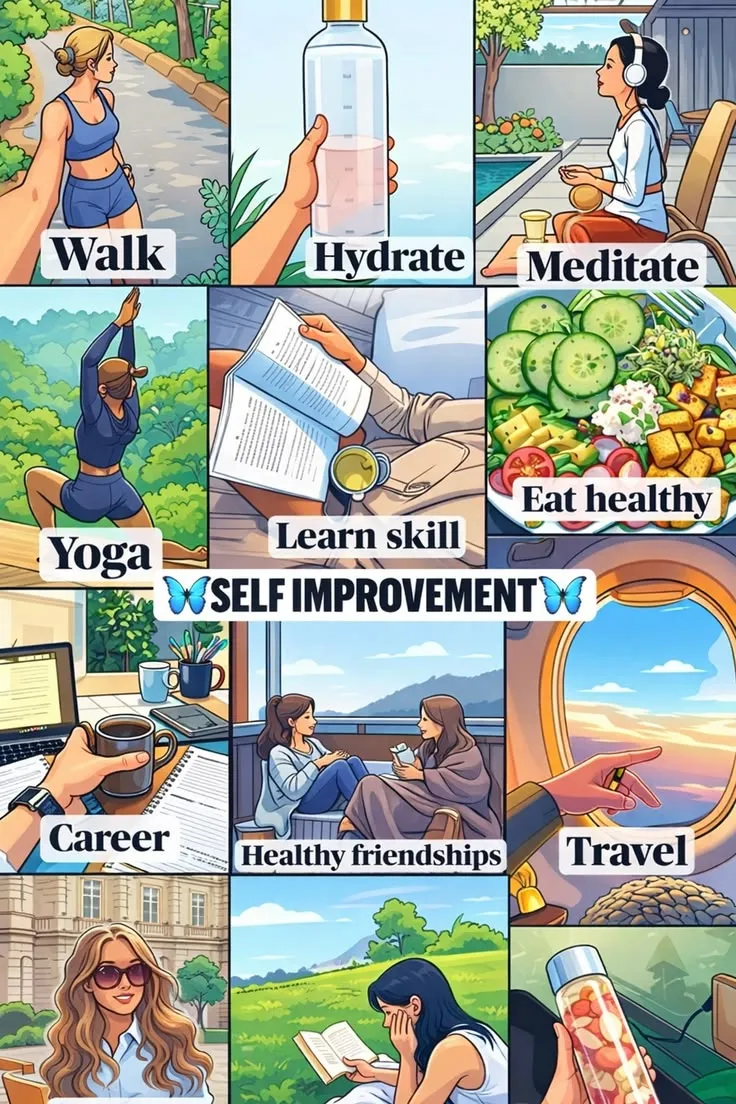
Health-related habits such as consistent sleep schedules, regular movement, hydration, and mindful eating often create positive spillover effects that make additional changes easier. Productivity habits such as planning the day or limiting distractions similarly support broader improvement.
The Long-Term Perspective
Research indicates that the time required for a new behavior to become automatic varies widely, often ranging from several weeks to many months depending on the person and the complexity of the action. The exact number of days is less important than continued practice. Progress is rarely linear; plateaus and occasional setbacks are normal.
The cumulative effect of good daily habits is substantial. Small improvements in physical health, mental clarity, emotional regulation, and use of time compound across months and years. The person who consistently takes modest positive actions usually surpasses the person who relies on intense but irregular effort.
Creating Lasting Improvement
Building good daily habits is a skill that improves with practice. By starting small, designing supportive environments, linking new actions to existing routines, making behaviors attractive and satisfying, and focusing on identity and consistency, anyone can create patterns that support a better life. The process does not demand perfection or superhuman discipline. It requires thoughtful design, patient repetition, and the willingness to begin again after interruptions.
Over time the habits themselves reduce the need for constant motivation. What once required effort becomes a natural part of the day. That transition—from deliberate practice to automatic behavior—is the practical foundation for lasting personal improvement.
Read more – thewhipp.com