
Technology has transformed the way people live, work, and interact with their homes. One of the biggest innovations in recent years is the rise of smart home technology. Smart home devices have become increasingly popular because they offer convenience, improve security, save energy, and make everyday tasks easier. From controlling lights with a voice command to monitoring your home from anywhere in the world, smart technology has changed the modern living experience.
For beginners, however, the world of smart home devices can seem complicated and overwhelming. Terms such as smart speakers, smart hubs, automation, and connected ecosystems may be unfamiliar to many people. Understanding the basics of smart home technology can help homeowners and renters make informed decisions and enjoy the benefits of a connected home without unnecessary confusion.
Understanding What Smart Home Devices Are and How They Work
Smart home devices are electronic products that connect to the internet or a local network and can be controlled remotely through smartphones, tablets, computers, or voice assistants. These devices are designed to automate tasks, improve convenience, and provide greater control over various aspects of a home.
Most smart devices use technologies such as Wi-Fi, Bluetooth, or other wireless communication systems to connect and share information. Once connected, users can manage these devices through dedicated mobile applications or voice commands. Many smart home products can also communicate with one another, creating automated routines that simplify daily life and improve efficiency.
Why Smart Home Technology Is Becoming So Popular
The growing popularity of smart home devices is largely due to their ability to make everyday activities more convenient. Many people appreciate being able to control home appliances without physically interacting with them. For example, smart lighting systems can be turned on or off remotely, and smart thermostats can automatically adjust temperatures based on personal preferences.
Another major reason for their popularity is the increasing focus on home security and energy efficiency. Smart devices provide homeowners with more information and control over their living environment, helping them save time, reduce energy consumption, and increase peace of mind.
Understanding Smart Speakers and Voice Assistants
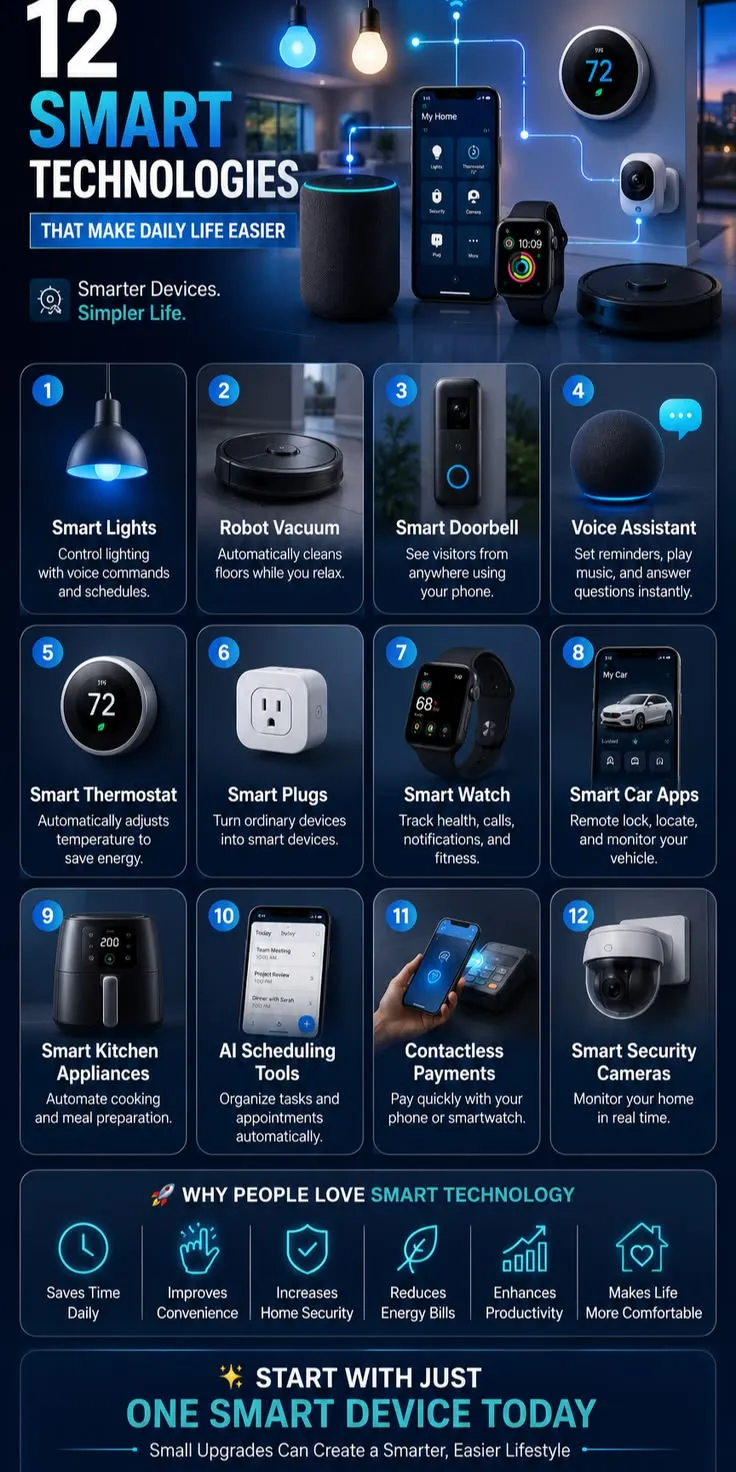
Smart speakers are often considered the starting point for many people entering the world of smart homes. These devices use built-in voice assistants that can answer questions, play music, provide weather updates, and control other connected devices.
Voice assistants make it easier to manage smart homes because users can simply speak commands instead of manually operating each device. Smart speakers can also create routines that perform multiple actions simultaneously, such as turning off lights and adjusting the thermostat before bedtime. Their simplicity and convenience have made them one of the most widely adopted smart home technologies.
How Smart Lighting Systems Improve Convenience and Efficiency
Smart lighting systems allow users to control lights remotely using smartphones or voice commands. Many systems also offer features such as scheduling, dimming, and automated lighting based on specific times or activities.
One of the major advantages of smart lighting is energy efficiency. Lights can automatically turn off when rooms are unoccupied, helping reduce unnecessary electricity consumption. Smart lighting also improves convenience by allowing users to customize brightness levels and create different lighting environments for work, relaxation, or entertainment.
Understanding Smart Thermostats and Climate Control
Smart thermostats are designed to improve home comfort while reducing energy usage. These devices can learn household routines and automatically adjust heating or cooling settings based on user preferences and occupancy patterns.
Many smart thermostats can also be controlled remotely, allowing homeowners to change temperatures before arriving home or while traveling. By optimizing heating and cooling systems, smart thermostats can contribute to lower energy consumption and improved household efficiency.
How Smart Security Devices Protect Your Home
Home security is one of the most important reasons people invest in smart technology. Smart security devices include cameras, video doorbells, motion sensors, and smart locks that provide enhanced monitoring and control.
These devices allow homeowners to receive alerts when unusual activity is detected and often enable remote viewing through mobile applications. Smart locks can also eliminate the need for traditional keys by allowing access through codes, smartphones, or biometric systems. The ability to monitor and manage home security from almost anywhere has made these devices highly attractive to modern homeowners.
Exploring Smart Plugs and Connected Appliances
Smart plugs are among the easiest and most affordable smart home devices for beginners. They allow ordinary electrical appliances to become smart by enabling remote control and scheduling features.
With smart plugs, users can turn appliances on or off from their smartphones and create automated schedules that improve convenience and reduce energy waste. Connected appliances such as smart refrigerators, washing machines, and coffee makers further expand the possibilities of home automation by providing additional features and remote control capabilities.
Understanding Smart Home Hubs and Device Compatibility
As the number of smart devices in a home increases, managing them individually can become challenging. Smart home hubs help solve this problem by acting as a central control system that connects multiple devices from different manufacturers.
A hub allows users to manage various smart products from a single interface and create automation routines involving multiple devices. Understanding device compatibility is important before purchasing smart products because not all devices work seamlessly together. Choosing products that support common smart home standards can help create a more integrated and reliable system.
The Benefits of Home Automation and Smart Routines
One of the most exciting aspects of smart home technology is automation. Home automation allows devices to perform actions automatically based on schedules, environmental conditions, or user behavior.
For example, lights can turn on when someone enters a room, security cameras can activate when residents leave home, and thermostats can adjust temperatures based on time of day. Automation not only saves time but also improves comfort, convenience, and energy efficiency. Even simple routines can significantly enhance the overall living experience.
Understanding Privacy and Security Concerns
Although smart home devices offer many benefits, they also raise important privacy and security considerations. Because these devices are connected to the internet, they can become vulnerable if not properly secured.
Using strong passwords, keeping software updated, and enabling additional security features can help protect personal information and reduce potential risks. Consumers should also understand the privacy policies associated with their devices and be aware of the types of data being collected and stored.
Tips for Beginners Starting Their Smart Home Journey
For beginners, it is often best to start with a few basic devices rather than attempting to automate an entire home at once. Smart speakers, lighting systems, and smart plugs are excellent starting points because they are relatively simple to install and use.
As familiarity with the technology grows, additional devices can be added gradually based on personal needs and preferences. Planning carefully and choosing compatible products can help create a smart home system that is practical, efficient, and easy to manage.
The Future of Smart Home Technology
Smart home technology continues to evolve rapidly as advances in artificial intelligence and connectivity create new possibilities. Future devices are expected to become even more intelligent, personalized, and energy-efficient. Increased integration between devices and improved automation capabilities may further simplify daily life and enhance home management.
As technology continues to develop, smart homes are likely to become more accessible and affordable, making connected living an increasingly common part of everyday life.
Conclusion
Smart home devices have transformed modern living by providing greater convenience, security, and control over household environments. From smart speakers and lighting systems to security cameras and automated appliances, these technologies offer numerous benefits for homeowners and renters alike.
For beginners, understanding how smart devices work and starting with a few simple products can make the transition into connected living both enjoyable and manageable. With careful planning and a focus on security and compatibility, anyone can create a smart home that improves comfort, saves time, and enhances everyday life. As smart technology continues to evolve, connected homes will play an even greater role in shaping the future of modern living.
