
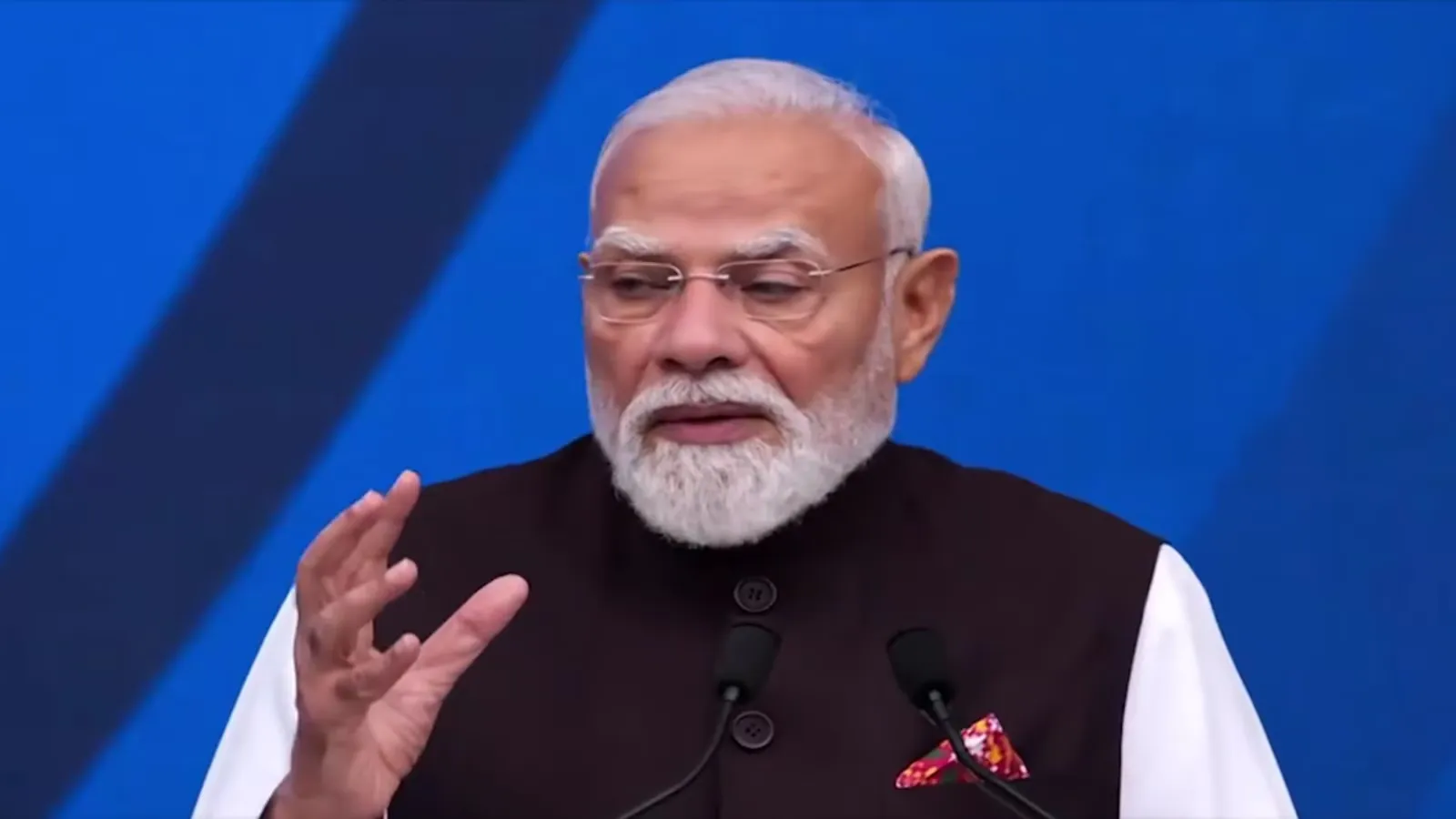
Prime Minister Narendra Modi has called for a fundamental expansion of India’s presence across Olympic disciplines, stating that the country currently fails to compete in half of the sports featured at the Games. Speaking at the Khelo India Dialogue, he described this limited participation as a “bitter truth” that has persisted for decades and directly limits India’s ability to improve its overall medal tally.
The Scale of the Challenge
Modi pointed out that Olympic programmes include a wide range of sports, yet Indian athletes remain absent from a substantial portion of them. At the 2024 Paris Olympics, India fielded competitors in 16 of the 32 sports on the official roster. Looking further back, the country participated in only 13 sports at the 2012 London Games, leaving more than 20 disciplines without any Indian representation.
“In the Olympics, there are so many different sports… Indian teams don’t even participate in half of them, which means that we are not competing for a major chunk of the medal tally,” the Prime Minister said. He noted that other nations regularly secure medals in these under-represented events while India does not even enter the competition. Without broader participation, he argued, significant growth in the medal count remains difficult to achieve.
Looking Beyond Traditional Strengths
India has traditionally concentrated its Olympic efforts on a relatively narrow set of disciplines such as shooting, wrestling, badminton, hockey, athletics and weightlifting. While these sports have delivered medals and produced elite athletes, Modi emphasised that relying solely on established areas will not be enough. Expanding into new territories is essential if the country aims for a more competitive standing at future Games.
He specifically highlighted surfing and sport climbing as examples of disciplines where India has never fielded an Olympic competitor. Both sports are scheduled for the 2028 Los Angeles Olympics. Modi observed that India’s natural geography offers clear advantages for developing talent in these areas. The country possesses an extensive coastline suited to surfing and vast hilly and mountainous regions that could support sport climbing. He also referred to potential in water sports and winter sports, noting that India has both the demographic base and the physical landscape required.
“Despite this, we are not seen in these sports anywhere in the world. That’s why we have to find opportunities of growing these sports in different regions. To increase our medal tally, we will have to master these sports as well,” he stated.
Connecting Sports to Nation-Building
The Prime Minister placed the call for wider Olympic participation within a larger vision for Indian sport. He stressed that the goal extends beyond the medal table. Sports, he said, should become an integral part of the nation’s development process by combining sporting excellence with the energy of India’s youth.
This message builds directly on his Independence Day address delivered from the Red Fort on August 15. On that occasion, Modi announced a nationwide talent identification programme aimed at children aged five to fifteen. The initiative is designed to discover potential athletes early and guide them toward sports that match their abilities and the country’s geographic strengths. The same speech also reaffirmed India’s interest in hosting the 2036 Olympic Games, with a clear intent to prepare systematically for disciplines in which the country currently has little or no presence.
Practical Implications for Future Games
Expanding participation will require coordinated efforts across multiple levels. District-level sporting ecosystems, improved infrastructure in coastal and mountainous regions, specialised coaching, and sustained funding will all play a role. Early talent identification, as outlined in the national campaign, is expected to form the foundation. Identifying children with natural aptitude for surfing, climbing or other underdeveloped sports and providing them with structured pathways could gradually produce competitive athletes at the international level.
The 2028 Los Angeles Games will offer an early opportunity to test progress in newer Olympic sports. Looking further ahead, a successful expansion of India’s Olympic footprint would strengthen the country’s case for hosting the Games in 2036 and help deliver a stronger overall performance on home soil.
A Long-Standing Gap That Needs Closing
Modi’s remarks underline a structural issue that has limited India’s Olympic results for years. While the country has celebrated individual and team successes in select disciplines, the absence from half the sports on the Olympic programme has meant missing out on a large share of available medals. Closing that gap will not happen overnight. It demands patient investment in infrastructure, coaching capacity, and grassroots programmes tailored to India’s diverse geography.
By publicly acknowledging the shortfall and pointing toward concrete opportunities such as surfing and sport climbing, the Prime Minister has set a clear direction. The combination of a nationwide talent hunt, greater regional focus, and a broader understanding of sports as part of national development offers a framework for change. Whether India can translate this vision into consistent Olympic participation and improved results will depend on sustained execution in the years ahead.
The message is straightforward: to compete for a larger share of the medal tally, India must first begin competing in a larger share of the sports.
Read more – wisdomsuvichar.com
