
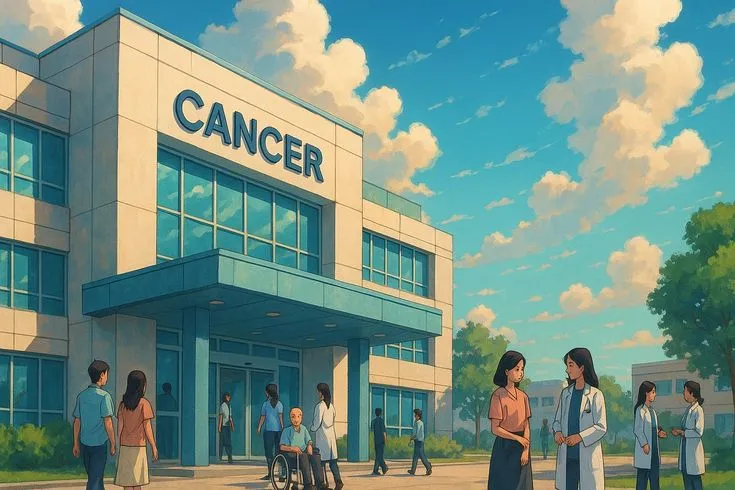
At Delhi State Cancer Institute, the promise of free cancer care collides daily with a harder reality. Patients arrive expecting relief from the financial burden of treatment, only to find themselves asking how they will afford essential medicines, diagnostic scans and timely care. Expensive machines sit idle while staff shortages stretch waiting lists and push families toward private facilities they can scarcely afford.
The Gap Between Promise and Practice
The institute was established to deliver accessible cancer treatment. Official statements continue to affirm that radiotherapy and chemotherapy are provided free of cost, particularly for poorer patients. Private ward options exist on nominal charges for those who can pay. In practice, however, many patients report mounting out-of-pocket expenses that undermine the institution’s public mandate.
One recurring difficulty involves high-cost drugs that are not consistently available within the hospital. Patients describe purchasing critical medicines such as targeted therapies from outside pharmacies at significant monthly cost. Diagnostic tests present another barrier. When PET-CT scans or other advanced imaging cannot be performed promptly inside the institute, families are directed to private centres where a single scan can cost twelve thousand rupees or more. For households already strained by illness, these expenses accumulate rapidly.
Idle Equipment and Lost Capacity
The most visible symbol of the problem is high-value equipment that remains unused. Records placed before the Delhi High Court show that the Department of Nuclear Medicine acquired sophisticated machines in 2017 at a combined cost running into several million dollars, plus substantial local and installation expenses. A medical cyclotron, essential for producing the short-lived radioactive isotopes required for PET scans, has stood idle for years. Officials have attributed the shutdown to the absence of qualified manpower needed to operate and maintain it safely.
Other advanced systems, including imaging equipment designed to support precise cancer treatment planning, have similarly remained underutilised or non-functional. In some cases the machines are described as “under evaluation.” In others, the simple lack of trained technicians or specialists has kept them offline. The High Court has described the situation as a gross waste of public resources and ordered wider audits across Delhi government hospitals. The findings at the cancer institute stood out for the scale of investment left unproductive.
When specialised equipment cannot be used, the hospital’s ability to offer comprehensive care shrinks. Patients who need timely staging scans or treatment monitoring face delays measured in weeks or months. Some radiotherapy schedules have stretched far into the future. The resulting bottlenecks force difficult choices: wait and risk disease progression, or pay privately and risk financial ruin.
Staff Shortages at the Core
Behind the idle machines and long queues lies a persistent shortage of personnel. More than forty percent of the institute’s sanctioned posts remain vacant. The deficit spans doctors, specialists, technicians, nursing staff and administrative roles. Even recent recruitment drives have filled only a limited number of positions, many of them temporary. Patient footfall, once reported near fifteen hundred a day, has fallen sharply, reflecting both reduced capacity and the discouragement of those who encounter repeated obstacles.
With fewer hands available, remaining staff work under pressure. Beds and chemotherapy recliners cannot be utilised at full potential. Diagnostic services slow. Follow-up care becomes harder to sustain. The absence of consistent leadership in key roles over extended periods has compounded the difficulty of long-term planning and accountability.
The Human Cost
For patients and families, the consequences are immediate and personal. Cancer treatment is already physically and emotionally exhausting. When a public institution intended to remove financial barriers instead generates new ones, the sense of abandonment is profound. Many of those seeking care at the institute come from modest economic backgrounds. They have nowhere else to turn for specialised oncology services within the public system. Delays in diagnosis or treatment can alter outcomes. Debt incurred for private tests and medicines can impoverish households for years.
The situation also raises broader questions about public health investment. Purchasing advanced technology without securing the human expertise and operational systems required to run it produces the appearance of modern capacity without the substance. Audits and court scrutiny have brought the discrepancies into the open, yet the daily experience of patients continues to reflect the same constraints.
Pathways Toward Improvement
Addressing the crisis requires simultaneous attention to several fronts. Filling vacant posts with qualified personnel, especially in nuclear medicine and other technical specialties, is essential if expensive equipment is to be brought back into service. Streamlining procurement and maintenance processes can reduce the time machines spend offline. Ensuring consistent availability of essential drugs within the hospital would directly lower out-of-pocket costs. Transparent communication with patients about waiting times and alternative pathways under government schemes can reduce confusion and distress.
Oversight mechanisms already exist through the courts and administrative channels. Converting findings into sustained operational change will determine whether the institute can reclaim its intended role. Temporary appointments and piecemeal recruitment have not resolved the structural shortage. A more comprehensive workforce plan, paired with accountability for equipment utilisation, is necessary.
A Test of Public Commitment
Delhi State Cancer Institute was meant to stand as proof that quality cancer care need not depend on private wealth. The current gap between that aspiration and the lived experience of many patients tests the credibility of public healthcare commitments. Expensive machines gathering dust while patients ration medicines or postpone scans represent a failure of systems rather than a lack of resources alone.
Patients who enter the gates seeking free treatment should not leave calculating how to finance the next injection or the next scan. Closing that gap demands more than additional purchases of technology. It requires the trained people, reliable supply chains and administrative resolve that turn infrastructure into actual care. Until those elements are in place, the question heard in the corridors will continue to echo: if this is a free hospital, how can I afford it?
Read more – Instantdua.com
